Real estate development is changing. Buyers, investors, municipalities, and regulators are paying closer attention to how buildings affect the environment, communities, and long-term operating costs.
For developers, this means sustainability is no longer only about adding green features after a project is designed. Successful projects now consider environmental factors from the earliest planning stages.
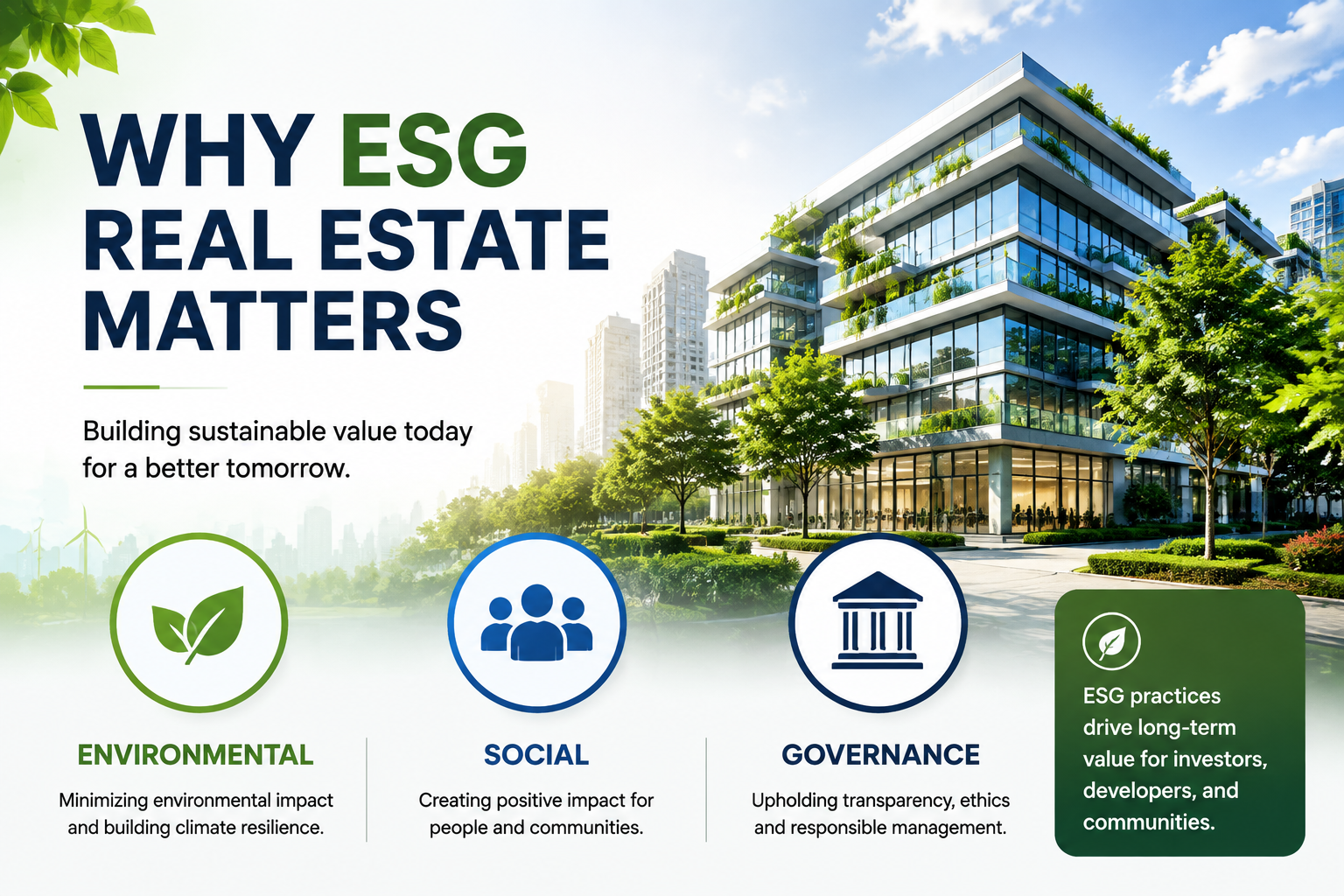
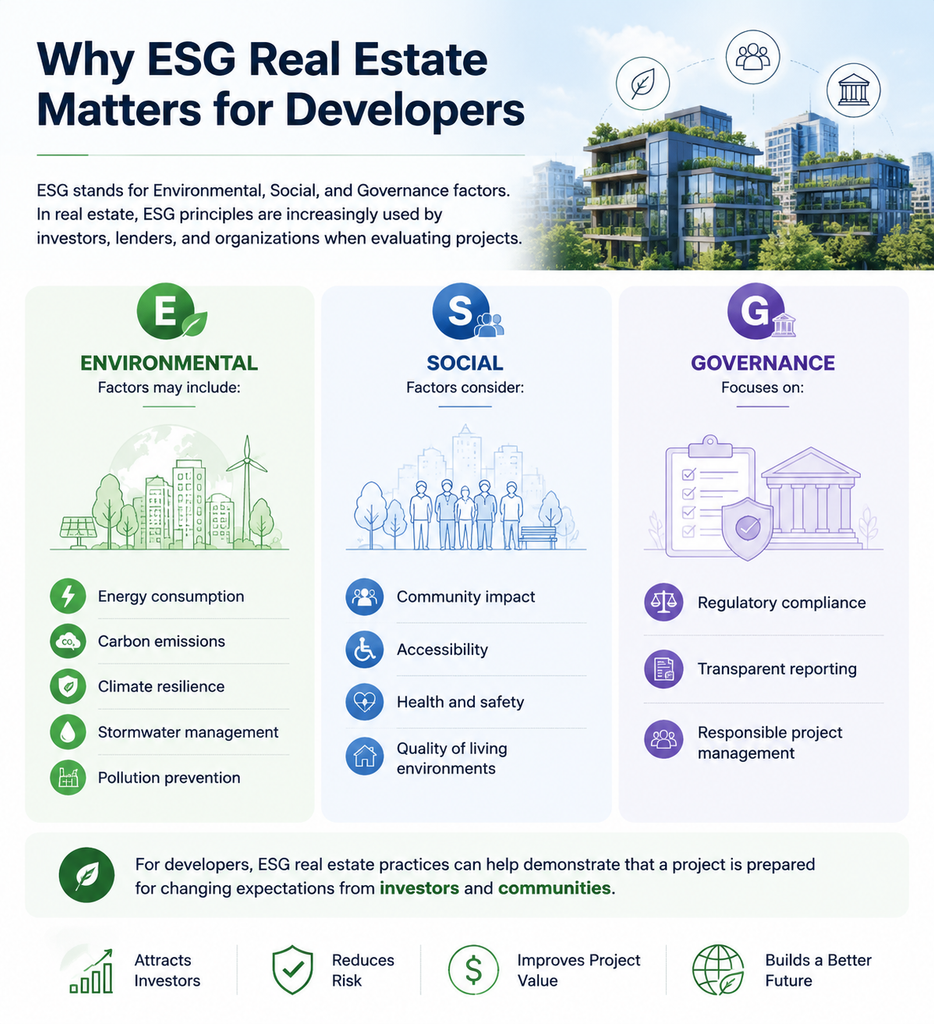
Whether you are working on residential communities, commercial properties, or mixed-use developments, understanding ESG real estate, environmental requirements, and sustainable planning strategies can reduce risks and create stronger projects.
What Sustainable Development Means in Real Estate
Sustainable real estate development focuses on creating buildings and communities that balance economic goals with environmental responsibility and social value.
A sustainable project considers:
- Energy efficiency and reduced emissions
- Water management
- Waste reduction
- Protection of natural features
- Responsible material selection
- Community impact
- Long-term operating performance
For developers, sustainability is not only an environmental goal. It can influence approval timelines, project costs, property value, and market demand.
Modern real estate sustainability strategies help developers create properties that are more resilient, efficient, and attractive to future buyers and tenants.
Sustainability Should Start Before Construction
One of the biggest mistakes in sustainable development is treating sustainability as a construction-stage decision.
Many environmental challenges are easier and less expensive to address during planning.
Early considerations may include:
- Site selection
- Natural feature protection
- Transportation access
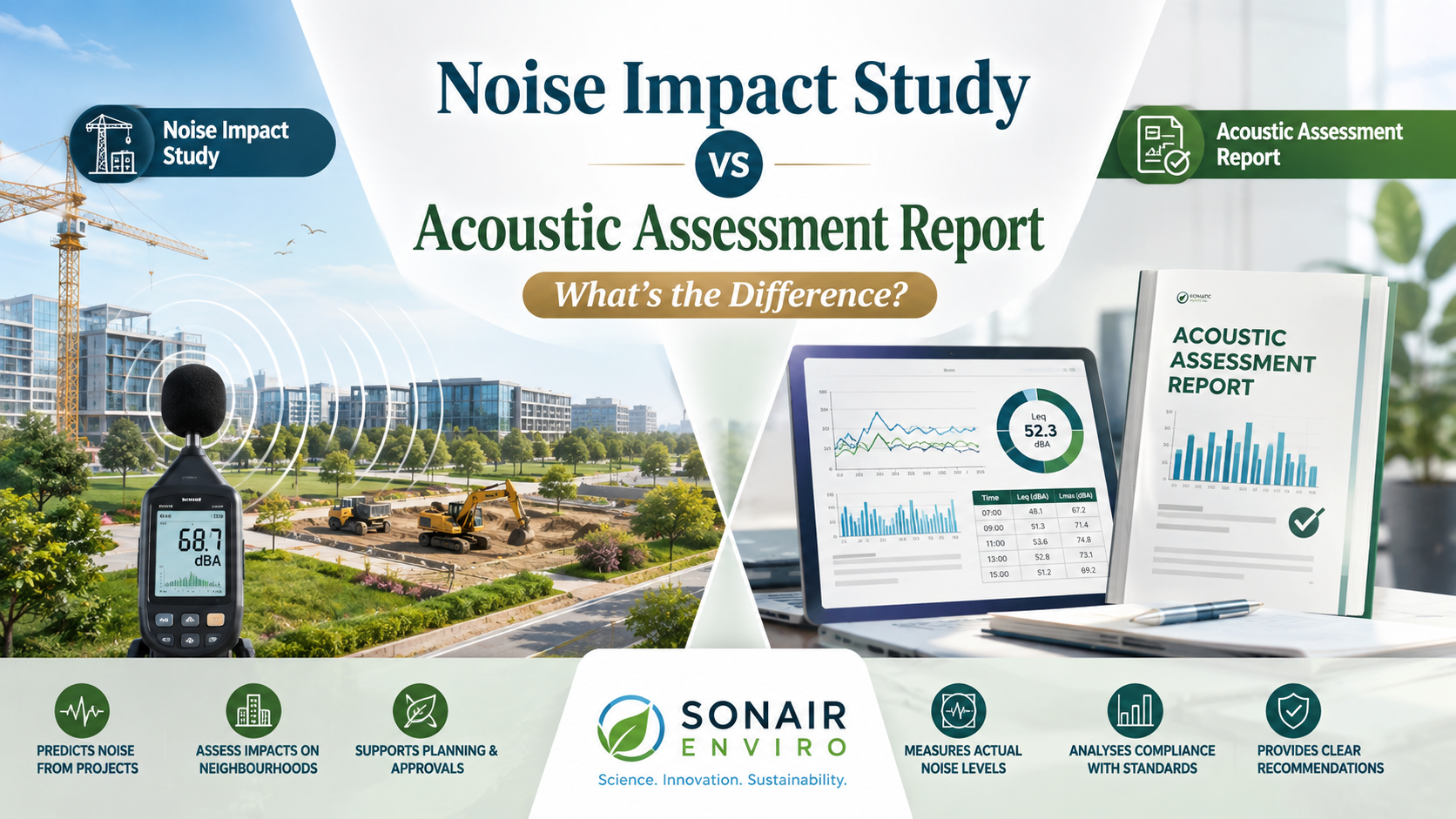
- Noise impacts
- Air quality concerns
- Stormwater planning
- Energy performance goals
This approach is especially important in Ontario, where development projects may require environmental studies, municipal approvals, and compliance documentation before construction begins.
SONAIR Environmental supports developers through services such as environmental reporting, air quality studies, and land use compatibility studies.
Sustainable Site Planning Reduces Future Problems
Sustainable site planning focuses on how a development interacts with its surrounding environment.
A well-planned site can reduce environmental impacts by considering:
- Existing vegetation and natural areas
- Drainage patterns
- Nearby industrial activities
- Transportation connections
- Noise-sensitive areas
- Future climate conditions
For example, placing residential buildings close to existing industrial operations without proper assessment can create future conflicts. Residents may experience noise concerns, while businesses may face complaints or operational restrictions.
Early environmental review helps identify these risks before they become expensive problems.
Sustainable Construction Practices Go Beyond Materials
Many people associate sustainability with recycled materials or energy-efficient appliances. While those features matter, sustainable construction practices involve a much wider approach.
Developers can improve sustainability by considering:
- Construction waste management
- Efficient equipment use
- Low-emission materials
- Reduced energy consumption
- Water conservation systems
- Building durability
A sustainable building is not only efficient when completed. It should also minimize environmental impacts throughout the construction process.
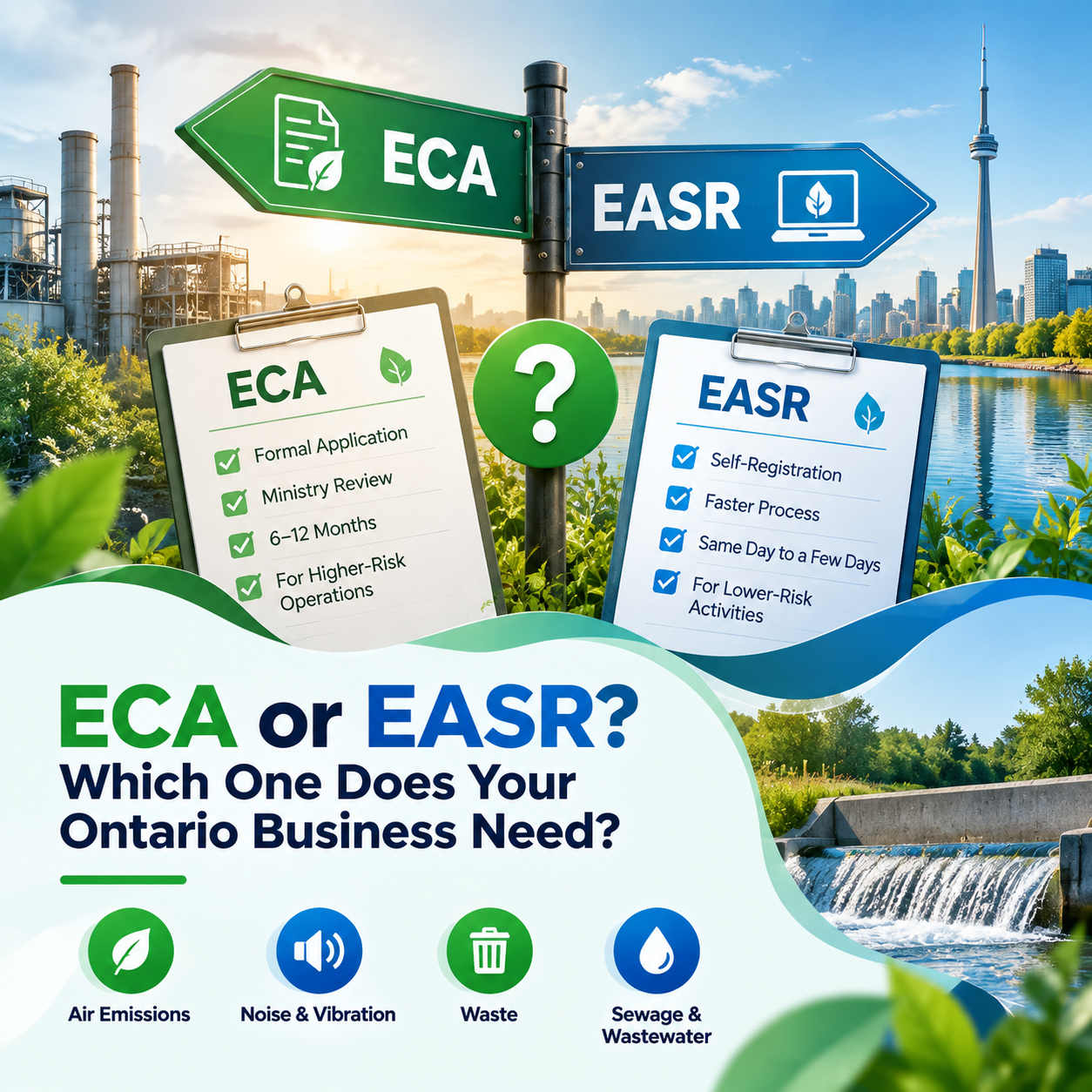
The Role of Environmental Compliance Approval
Environmental regulations play an important role in responsible development.
Depending on the project type, developers may need an environmental compliance approval or other environmental documentation before moving forward.
These approvals help ensure that projects meet requirements related to issues such as:
- Air emissions
- Noise impacts
- Waste management
- Industrial compatibility
- Environmental protection
Understanding approval requirements early helps prevent redesigns, delays, and unexpected costs.
SONAIR Environmental helps businesses and developers navigate environmental requirements through services including Environmental Compliance Approval support.
Green Building Development Requires a Complete Strategy
Green building development is most effective when sustainability is integrated into the entire project lifecycle.
A strong approach includes:
Planning Stage
Identify environmental risks, regulatory requirements, and sustainability goals before final designs are completed.
Design Stage
Incorporate energy efficiency, water management, natural features, and community considerations.
Construction Stage
Follow sustainable construction practices and monitor environmental performance.
Operation Stage
Track building performance and continue improving efficiency.
Sustainability is not a single feature. It is a process that continues throughout the life of a property.
Common Challenges Developers Face
Many real estate professionals want to build more sustainably but face practical challenges.
Higher Initial Costs
Some sustainable features require additional upfront investment. However, energy savings, improved marketability, and reduced operational costs can create long-term value.
Complex Regulations
Environmental requirements can vary depending on location, project type, and surrounding land uses.
Lack of Early Planning
Waiting until late in the development process can limit available solutions and increase costs.
The best results usually come from involving environmental specialists early.
What Real Estate Professionals Should Consider Before Starting a Project
Before moving forward with a sustainable development project, ask:
Industry Insights: Why Planning Matters
Real estate professionals often discuss similar challenges in online industry communities. In Reddit discussions among developers and builders, many users highlight that sustainability decisions are most effective when considered early rather than added after design decisions are finalized.
These discussions represent professional experiences rather than official research, but they reflect a common industry lesson: early planning creates more options and reduces costly changes later.
The Future of Sustainable Real Estate Development
The future of real estate is moving toward smarter, more environmentally responsible projects.
Developers who understand real estate sustainability will be better prepared for changing regulations, investor expectations, and customer preferences.
The strongest projects will not treat sustainability as a marketing feature. They will use environmental planning as a foundation for better design, stronger approvals, and long-term value.
Conculsion
Making sustainable development easier starts with better planning.
From ESG real estate strategies to green building development and environmental compliance approval, successful projects require a clear understanding of environmental impacts before construction begins.
By integrating sustainable site planning, responsible construction methods, and early environmental assessments, real estate professionals can create projects that benefit investors, communities, and the environment.
SONAIR Environmental works with developers, businesses, and property owners to identify environmental risks and support responsible development. Learn more about our environmental consulting services and how we can help your next project move forward with confidence.