Environmental Impact Assessments (EIAs) are vital for ensuring that businesses comply with environmental regulations and maintain sustainable operations. As environmental concerns continue to grow globally, businesses must adopt practices that minimize harm to ecosystems while aligning with governmental policies and regulations. This guide provides businesses with an in-depth understanding of EIAs, their importance, and how they can navigate the complexities of environmental compliance.
What is an Environmental Impact Assessment (EIA)?
An Environmental Impact Assessment (EIA) is a systematic process used to evaluate the potential environmental effects of a proposed project or development before it begins. The EIA assesses how the project could impact the environment, society, and economy, aiming to mitigate negative consequences and promote sustainability.
EIAs are required by governments in many regions as part of environmental regulations. These assessments typically include identifying potential environmental risks, proposing mitigation measures, and ensuring public participation in the decision-making process.
Key Components of an EIA:
- Screening: Determining whether a project requires an EIA based on its size, location, and potential environmental impact.
- Scoping: Identifying the significant issues that need to be addressed during the assessment.
- Impact Analysis: Analyzing the potential effects of the proposed project on the environment, including air, water, soil, biodiversity, and public health.
- Mitigation Measures: Proposing solutions to avoid, minimize, or mitigate environmental impacts.
- Reporting: Environmental Reporting presents the findings in a detailed report, often known as an Environmental Impact Statement (EIS).
- Public Participation: Engaging stakeholders, including local communities, in the decision-making process.
Why are EIAs Important for Businesses?
EIAs are more than just a regulatory requirement, they provide businesses with valuable insights into the long-term sustainability of their projects. Here’s why every business should consider EIAs as part of their operational strategy:
- Risk Mitigation: By identifying potential environmental risks early, businesses can avoid costly legal penalties, fines, and reputational damage. Preventing environmental degradation can also reduce the likelihood of future lawsuits.
- Regulatory Compliance: Governments worldwide have strict environmental regulations. Non-compliance can lead to delays, project shutdowns, or fines. EIAs help businesses stay compliant with national and international environmental laws.
- Sustainability Initiatives: Implementing an EIA can help businesses reduce their environmental footprint, increase operational efficiency, and build a more sustainable brand image, which can attract environmentally-conscious customers.
- Competitive Advantage: As consumers and investors become more focused on sustainability, businesses that prioritize environmental responsibility can stand out in the market.
The Role of Environmental Compliance in EIAs
Environmental compliance refers to a business’s adherence to environmental laws and regulations. An EIA is a key tool for ensuring compliance, as it helps businesses identify whether their activities align with local, regional, or national environmental standards.
Key Compliance Aspects Addressed by EIAs:
- Air Quality: Analyzing how a project may affect air pollution and how to mitigate emissions.
- Water Management: Ensuring that water resources are not overused or polluted.
- Waste Management: Planning how waste materials from a project will be handled, reducing their environmental impact.
- Biodiversity: Ensuring that development does not threaten local wildlife and ecosystems.
Example:
A construction company in New York conducting an EIA for a new high-rise project had to develop a strategy to reduce stormwater runoff. This included designing a green roof, installing permeable paving materials, and creating rainwater harvesting systems, all of which complied with New York City’s stormwater management regulations.
The Process of Conducting an EIA
The EIA process involves multiple stages, from the early planning stages of a project to the implementation of mitigation measures. Businesses should be prepared to engage with experts, local authorities, and communities throughout the process.
1. Project Screening
The first step is to determine if an EIA is required. Not all projects need a full assessment, so businesses should begin by consulting relevant regulations or environmental consultants to understand the criteria.
2. Scoping
During scoping, the key environmental issues to be addressed in the assessment are identified. For example, if the project involves deforestation, it would require in-depth analysis of how local wildlife and ecosystems could be impacted.
3. Impact Assessment
A detailed assessment of the environmental impacts follows. This phase involves collecting data on the affected environment, including air, water, land, and biodiversity. Businesses often hire environmental consultants to carry out this work, as they possess the expertise to properly analyze data.
4. Reporting
The results of the EIA are compiled into a report. This report outlines the findings, including the significance of potential impacts and how they can be mitigated. It serves as the basis for decision-making by regulatory authorities.
5. Mitigation and Monitoring
Once the report is complete, the business must implement the suggested mitigation measures. These measures might involve redesigning the project, altering construction schedules, or installing pollution control systems. Regular monitoring during and after construction ensures that the mitigation measures are effective.
How Environmental Consulting Fits into the EIA Process
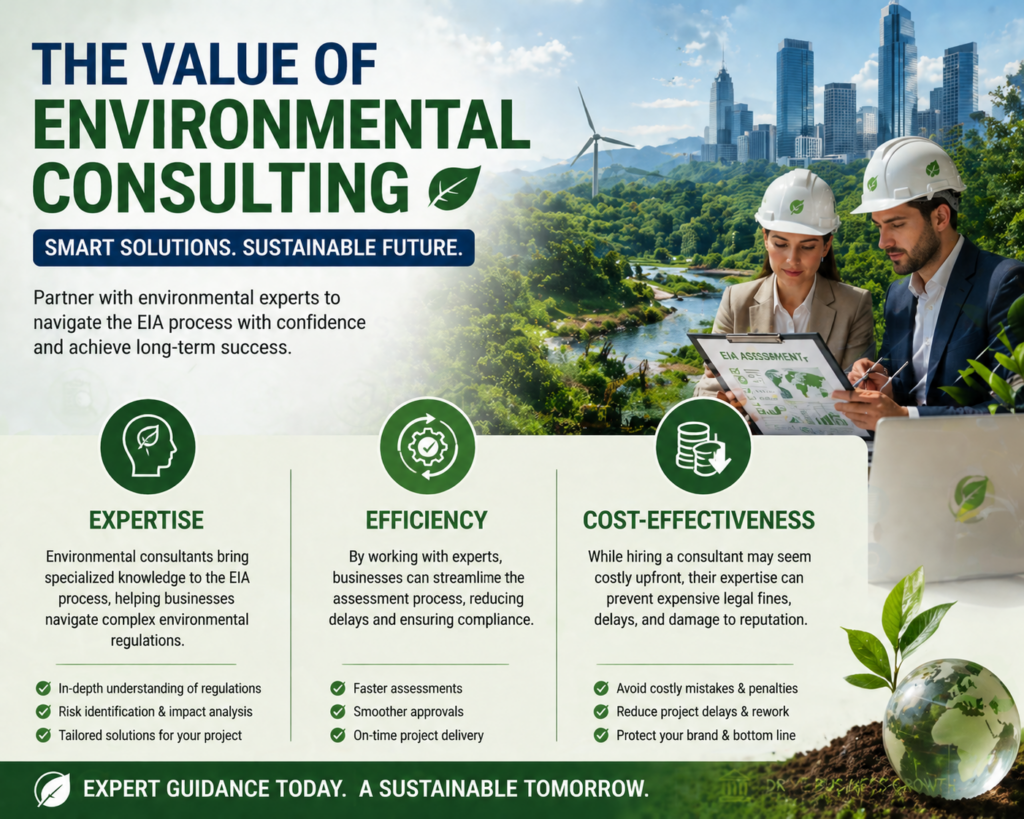
Environmental consulting firms play a critical role in the EIA process. These firms provide the expertise needed to navigate complex environmental regulations and carry out detailed assessments.
Services Offered by Environmental Consulting Firms:
- EIA Preparation: Consultants help businesses prepare the EIA documentation, including identifying environmental risks, gathering data, and suggesting mitigation measures.
- Regulatory Guidance: They provide guidance on meeting legal requirements, ensuring that all necessary permits are obtained.
- Stakeholder Engagement: Consultants often assist in organizing public consultations and ensuring that stakeholder concerns are incorporated into the process.
Benefits of Using Environmental Consultants
Environmental Impact Assessment Best Practices for Businesses
To maximize the effectiveness of an EIA, businesses should consider the following best practices:
- Engage Early: Start the EIA process early in project development to identify potential risks before they become costly problems.
- Collaborate with Stakeholders: Involve the local community, environmental NGOs, and other stakeholders in the process to gather diverse perspectives and minimize conflicts.
- Prioritize Transparency: Maintain clear communication about the project’s potential environmental impact and the steps being taken to mitigate it.
- Leverage Technology: Use advanced tools, such as GIS mapping and modelling software, to predict environmental impacts more accurately.
Conclusion
Environmental Impact Assessments are essential for businesses looking to minimize their environmental footprint and comply with legal standards. By conducting thorough EIAs, businesses not only meet regulatory requirements but also demonstrate their commitment to sustainability, reduce risks, and enhance their reputation. Working with environmental consultants can help streamline the process, ensuring that businesses follow best practices while protecting the environment for future generations.