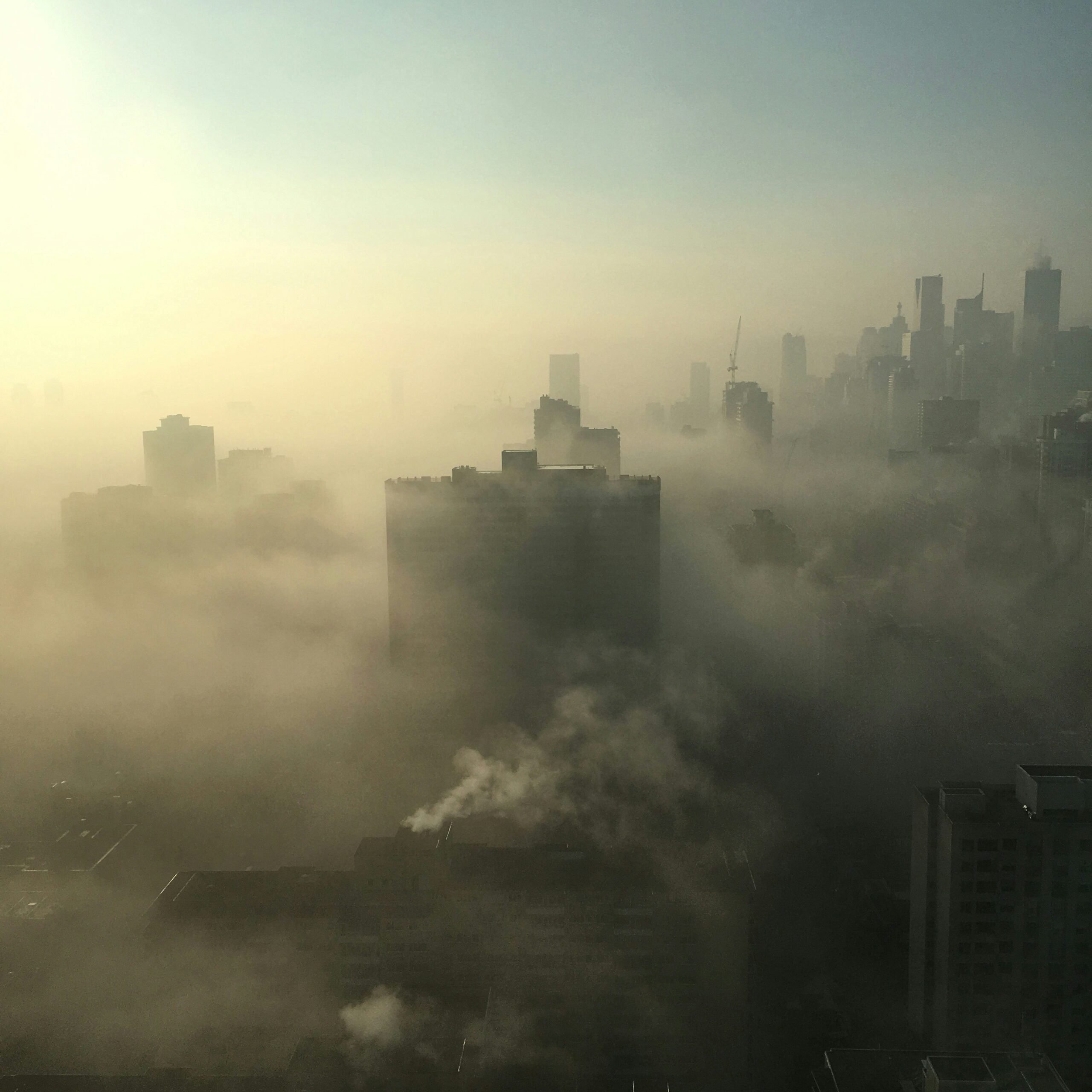
If dust is settling beyond your site boundaries or neighbours are raising complaints, your project may already be at risk.
Construction dust and odours can impact health, compliance, and community relations. A proactive dust and odour management plan helps prevent issues before they escalate, protecting both your project and your reputation.
A dust and odour management plan is not just best practice, it’s often a regulatory requirement and a key component of project success.
What Is a Dust & Odour Management Plan?
A dust and odour management plan (DOMP) is a formal document that:
- Identifies sources of dust and odour during construction activities.
- Assesses risks and sensitive receptors (workers, residents, vegetation).
- Specifies monitoring, controls, and mitigation strategies.
- Defines roles, responsibilities, and reporting requirements.
- Provides ongoing review, trigger limits, and improvement measures.
Think of it as the environmental safety backbone for any construction project that could generate airborne emissions.
What Homeowners Say About Post-Construction Dust
Post-construction dust is one of the most common complaints after renovation or new construction. Even after thorough cleaning, fine particles can continue settling as dust trapped in HVAC systems and hidden cavities is redistributed through airflow. In Reddit discussions, homeowners describe wiping surfaces repeatedly only to see dust return within hours, underscoring the need for proper containment, filtration, and ventilation cleaning.
Step‑by‑Step: Creating an Effective Dust & Odour Management Plan for Construction Projects
Sonair Environmental’s structured approach that construction professionals can follow:
1. Assess & Identify Dust and Odour Sources
Start with a thorough project assessment:
- List all activities that could generate dust or odour (earthworks, demolition, stockpiles, material transfers).
- Determine materials involved (soil, aggregates, cement) and their potential for fugitive dust.
- Identify sensitive nearby receptors such as neighbours, schools, hospitals, or wildlife habitat.
The goal at this stage is to understand where the risks lie and how dust and odour might spread.
2. Define Objectives and Regulatory Targets
Clearly state what your plan aims to achieve, such as:
- Maintaining dust levels below predetermined thresholds.
- Eliminating or reducing odour impacts at property boundaries.
- Complying with all planning conditions and permits.
Refer to local guidance documents, such as region‑specific air quality monitoring guidelines, to ensure compliance.
3. Implement Control Measures
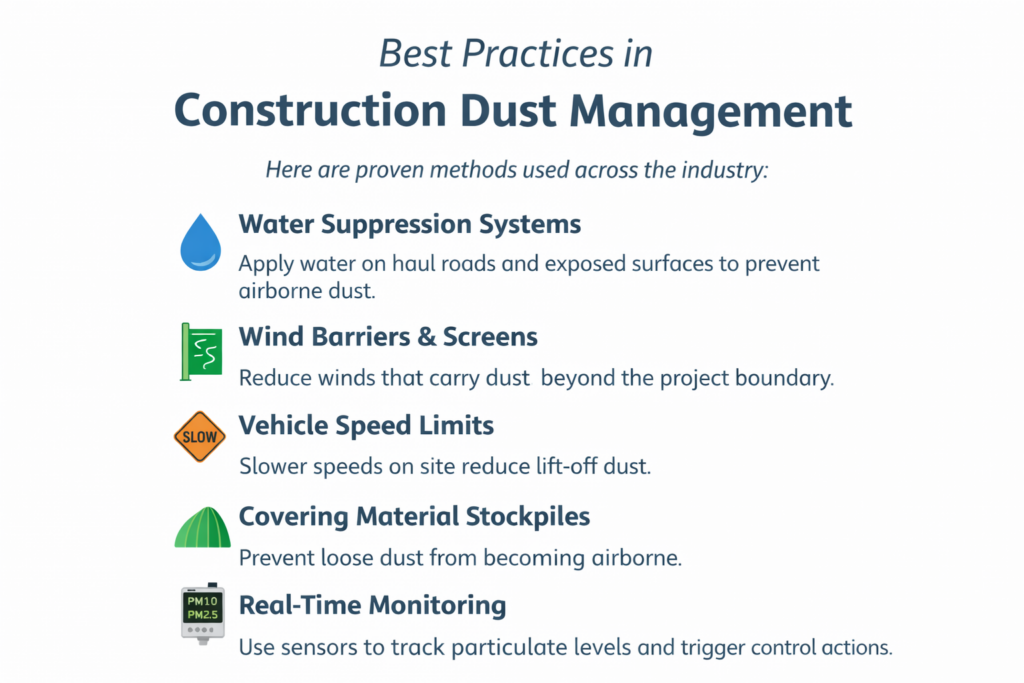
Control strategies typically fall into these categories:
Source Control
Minimizing emissions where they originate:
- Wet suppression (water sprays, misting).
- Wind fencing, barriers, and dust screens.
- Keeping material handling and drop heights controlled.
Pathway Control
Limiting how dust and odour move:
- Covering stockpiles.
- Designating routes for vehicles to minimize disturbance.
- Orienting activities away from sensitive receptors.
Receiver Protection
Protecting workers and neighbouring communities:
- Establishing buffer zones.
- Managing wind directions during critical operations.
- Scheduling high‑emission tasks when conditions are least impactful.
Odour control is similar but can also include:
- Ensuring proper ventilation for odour‑producing tasks.
- Locating activities away from adjacent properties.
- Using capture systems for odorous emissions.
4. Monitoring & Performance Indicators
A DOMP must include monitoring to confirm that controls are working:
- Visual inspections — check dust plumes and visible odour episodes.
- Particulate monitoring — use instruments to track PM10/PM2.5 levels.
- Odour surveys — record odour presence and intensity near sensitive locations.
Document all readings, trends, and exceedances to demonstrate compliance.
5. Roles & Responsibilities
Assign clear accountabilities:
- Who conducts daily dust and odour inspections?
- Who reviews monitoring data weekly?
- Who responds to community complaints?
Having a clear chain of responsibility is critical to ensuring the plan is executed consistently.
6. Review & Continuous Improvement
A plan should never be static. Regularly revisit your DOMP to:
- Evaluate the effectiveness of control measures.
- Update procedures based on monitoring feedback.
- Incorporate new technologies or methods for dust and odour control.
Continuous improvement helps a construction project stay ahead of emerging conditions or regulatory changes.
Conclusion
A strong dust and odour management plan is a cornerstone of modern construction environmental planning. It protects workers, safeguards neighbouring communities, helps projects comply with regulations, and reduces risk.
By assessing sources, implementing controls, monitoring performance, assigning responsibility, and reviewing results, project teams can manage dust and odour proactively — not reactively.
This level of diligent planning boosts both environmental performance and community trust, ultimately making your project more successful.