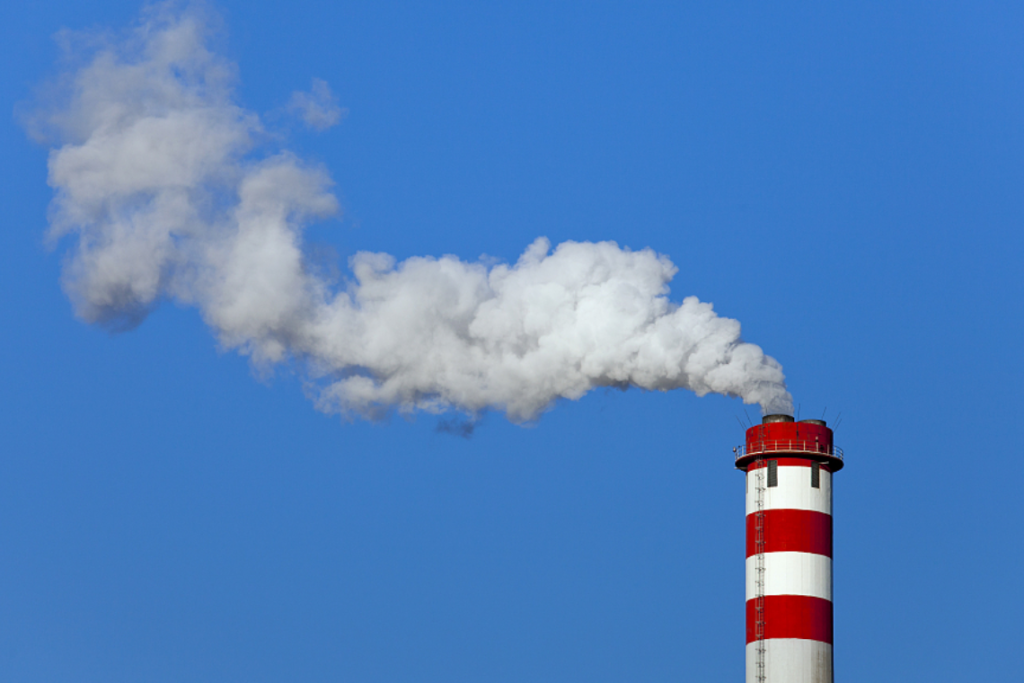
Industrial air pollution is a rising global concern. Industries play a major role in worsening air quality. The need for effective pollution control is urgent. As regulations tighten, industries are turning to technologies like scrubbers and filters to reduce pollution impacts. This article explores key sources of industrial emissions, available technologies for control, and the benefits of these solutions. We will also highlight real-world case studies showing successful system integration.
What Are Industrial Emissions and Their Impact?
Industrial emissions are pollutants released from manufacturing, power plants, and other industrial activities. These include harmful substances like particulate matter (PM), volatile organic compounds (VOCs), nitrogen oxides (NOx), sulfur dioxide (SO₂), and carbon monoxide (CO). Their impact is severe, leading to environmental and health issues.
- Environmental Impact: Emissions contribute to air pollution, smog, acid rain, and global warming. Pollutants like CO₂ and methane drive climate change, while particulate matter harms ecosystems.
- Health Impact: Exposure to these pollutants is linked to respiratory diseases, heart issues, and lung cancer. People near industrial areas are especially at risk from air emissions.
Main Sources of Industrial Air Emissions
Key sources of industrial air emissions include:
- Manufacturing and Processing Plants: These facilities release various pollutants through their processes, including metals and chemicals.
- Power Plants: Fossil fuel power plants emit CO₂, sulfur dioxide (SO₂), nitrogen oxides (NOx), and particulate matter (PM), contributing to air pollution.
- Waste Treatment: Waste treatment facilities, including incinerators and landfills, release methane and VOCs into the atmosphere. Managing emissions from waste treatment is essential for cleaner air. The benefits of waste management include not only reducing air pollutants but also enhancing operational efficiency through waste minimization techniques.
- Transportation: Trucks and ships emit pollutants, especially near ports and transportation hubs.
Benefits of Industrial Air Pollution Control: Environmental and Operational Advantages
Implementing air pollution control technologies offers key benefits for the environment and operational efficiency.
Environmental Benefits
- Reduction in Harmful Emissions: Technologies like scrubbers and filters cut down harmful gases and particulate matter, leading to cleaner air.
- Compliance with Regulations: Many industries must meet air quality standards. Pollution control systems help avoid legal issues and penalties.
- Protection of Ecosystems: Reducing emissions helps safeguard forests, water bodies, and wildlife affected by pollutants.
Operational Benefits
- Cost Savings: Lower emissions can reduce energy use and improve efficiency. This can prevent costly machinery repairs caused by pollutants.
- Improved Worker Health: Cleaner air leads to a healthier workforce, reducing illnesses and absenteeism.
- Public Relations: Showing commitment to environmental responsibility can enhance a company’s reputation and relationships with customers and regulators.
Scrubbers: Essential Tools for Industrial Air Pollution Control
Scrubbers are vital for controlling industrial air pollution. They remove pollutants from gases before release. Different types target specific pollutants.
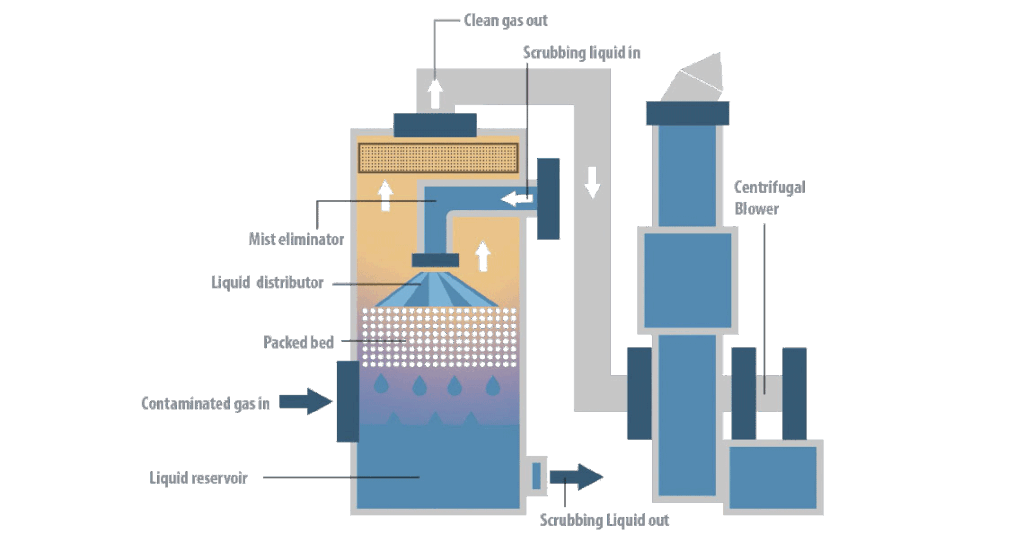
Wet Scrubbers: Removing Acid Gases and Particulates
Wet scrubbers use liquid solutions to absorb air pollutants. They effectively remove acid gases like sulfur dioxide (SO₂) and particulate matter. The liquid interacts with pollutants, trapping them from the gas stream.
Dry Scrubbers: High-Efficiency Pollutant Neutralization
Dry scrubbers use dry reagents to neutralize pollutants. They rely on solid materials, like lime, to absorb harmful substances. These systems suit high-temperature gas streams and minimize water use.
Hybrid Scrubbers: Combining Wet and Dry Technologies for Versatility
Hybrid scrubbers blend wet and dry technologies for versatile pollution control. They manage a wide range of pollutants, making them effective in various industrial settings.
Advanced Emission Control Solutions: Catalytic Converters, Activated Carbon, and Biofiltration
In addition to scrubbers, advanced technologies help control emissions.
Catalytic Converters
Catalytic converters speed up chemical reactions, turning harmful pollutants into less harmful substances. They’re used in industrial exhaust systems to cut emissions of nitrogen oxides (NOx) and carbon monoxide (CO).
Activated Carbon Adsorption
This method involves passing industrial gases through activated carbon to trap pollutants like VOCs and odors. It’s common in chemical manufacturing and waste treatment.
Biofiltration
Biofiltration uses microorganisms to break down organic pollutants in gases. This eco-friendly solution is great for treating VOCs and odors. It’s often used in food processing and wastewater treatment.
Integrating Pollution Control Systems for Optimal Industrial Air Quality
Integrating various pollution control technologies ensures that industries can effectively manage and minimize their emissions. A comprehensive approach often involves combining scrubbers, catalytic converters, filters, and other systems to handle different types of pollutants. Regular industrial air monitoring is crucial in this context, as it allows companies to track the effectiveness of their pollution control measures and ensure compliance with air quality regulations.
Key Technologies for Industrial Air Pollution Control
Several technologies are crucial for effective pollution control:
- Electrostatic Precipitators (ESPs): These use electrical charges to capture particles from exhaust gases.
- Dust Collectors: These systems remove dust and particulate matter from the air. Industries can create a dust management plan for effective dust control.
- Flue Gas Desulfurization (FGD): FGD systems remove sulfur dioxide (SO₂) from exhaust gases in power plants and other fossil fuel industries.
Conclusion: The Future of Industrial Air Pollution Control
The future of industrial air pollution control lies in advancing technologies that boost efficiency and reduce environmental impact. With stricter regulations and a focus on sustainability, industries must adopt innovative solutions to cut emissions. For more insights, visit Sonair Enviro.
By using technologies like scrubbers, catalytic converters, and biofiltration, industries can lower their environmental impact and boost efficiency. Integrating these systems is crucial for responsible and sustainable business practices.